
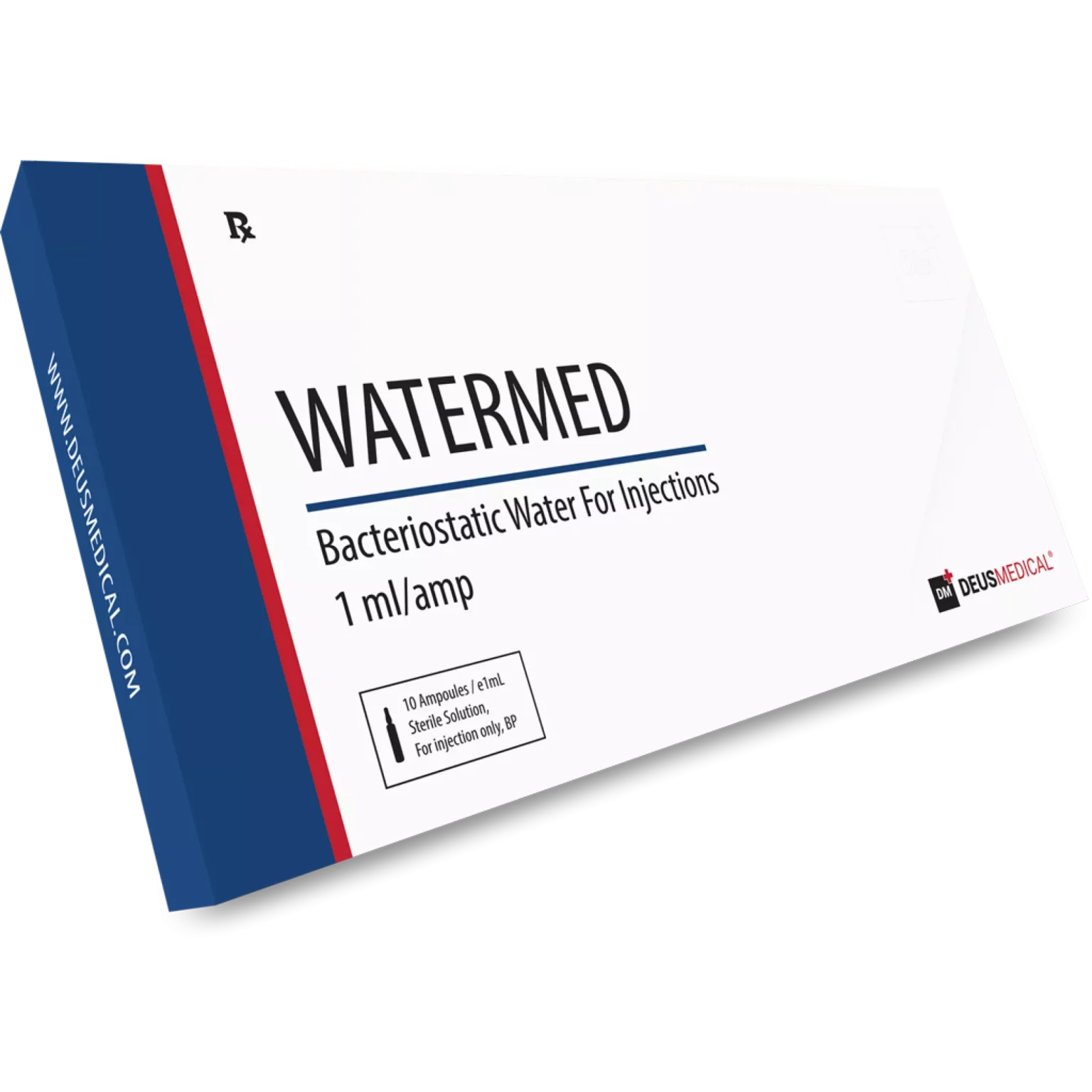
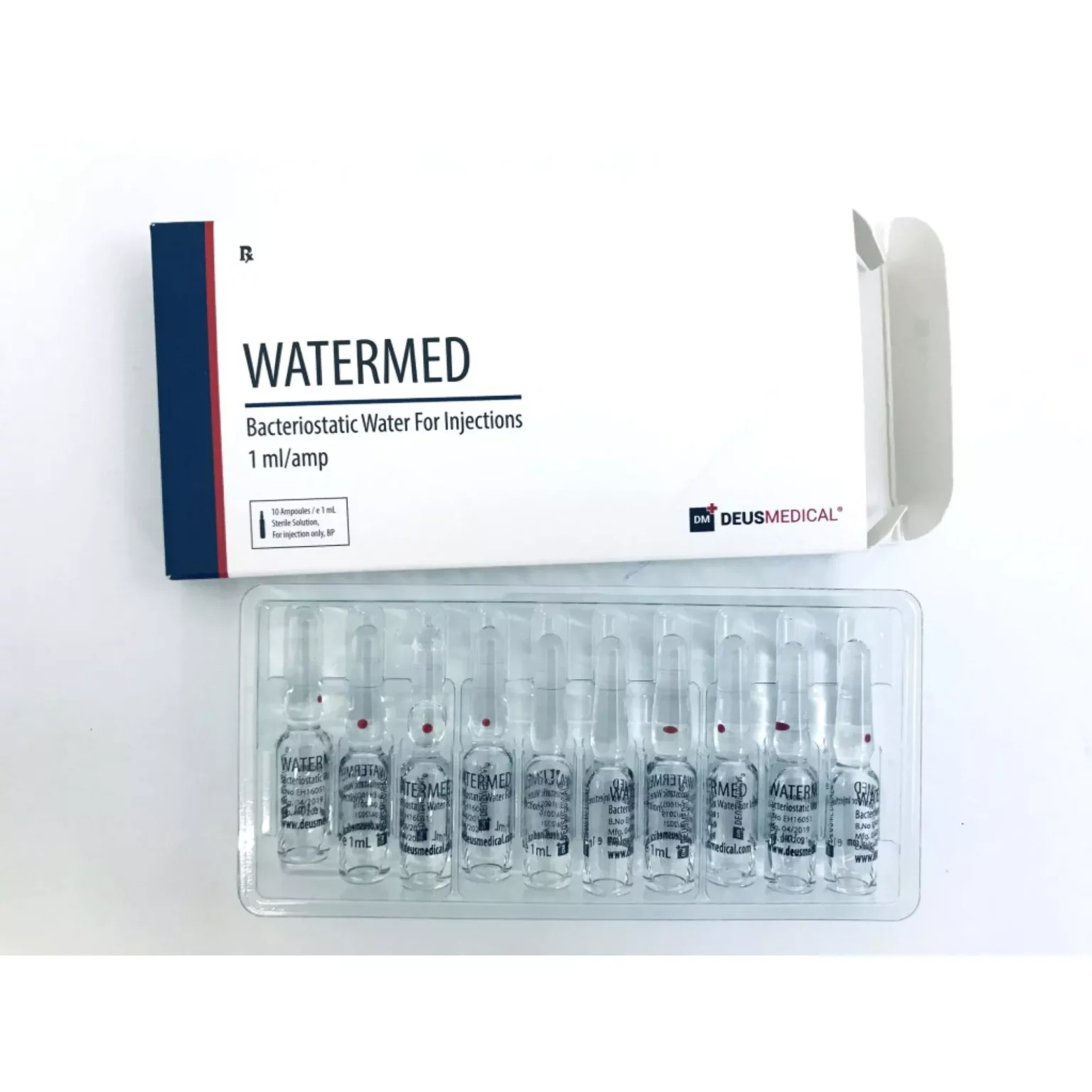


WATERMED (Bacteriostatic Water for Injections)
£120.00
WATERMED Bacteriostatic Water for Injections is a sterile, non-pyrogenic diluent containing 0.9% benzyl alcohol as a bacteriostatic preservative. Supplied in a multi-dose vial for use with compatible medicines as directed by a healthcare professional or the product label. Not for injection on its own and not for use in newborns.
WATERMED Bacteriostatic Water for Injections: Sterile Multi-Dose Diluent Vial
Every injectable that arrives as a powder or a concentrate depends on one quiet ingredient: the water used to dissolve or dilute it. Pick the wrong diluent, or handle the right one carelessly, and a convenient multi-dose vial can quickly become a contamination risk.
WATERMED Bacteriostatic Water for Injections is a sterile, non-pyrogenic diluent that contains a bacteriostatic preservative, so it is designed for vials that are punctured more than once. It is not a medicine in its own right. It is a carefully made carrier that helps compatible products reach the right concentration safely.
This guide explains what bacteriostatic water for injection is, how it compares with sterile water and saline, how to inspect and handle a multi-dose vial step by step, who should avoid it, and what to check before you buy. Whether you are a clinic buyer, a pharmacy team member or a patient following a prescriber’s instructions, you will find clear, practical answers below.
What Is Bacteriostatic Water for Injection?
| QUICK ANSWER
Bacteriostatic water for injection is sterile water that contains 0.9% benzyl alcohol as a preservative. The preservative limits bacterial growth after the vial stopper has been punctured, which is why it is used in multi-dose vials as a diluent for compatible medicines. It is not an active drug and is not injected on its own. |
In plain terms, the “bacteriostatic” part refers to the preservative. Benzyl alcohol does not sterilise a vial after it has been opened. It slows the growth of bacteria that could be introduced by repeated needle entries. That is why good technique still matters, and why the 28-day rule discussed later is so widely followed.
You can read more about the chemistry of the preservative in this benzyl alcohol overview on Wikipedia, and about the base product in the water for injection entry.
WATERMED at a Glance
- Product: WATERMED Bacteriostatic Water for Injections
- Type: sterile, non-pyrogenic diluent for injection
- Preservative: benzyl alcohol (0.9% in standard USP bacteriostatic water)
- Format: multi-dose vial with a pierceable rubber stopper
- Intended role: diluent for compatible products, used as directed by the product’s own instructions or a healthcare professional
- Not intended for: injection on its own, or use in newborns
Product Overview
What You Get in Every Vial
Each WATERMED vial contains sterile water prepared to injection-grade standards and combined with a bacteriostatic preservative. The vial is sealed with a pierceable stopper and a tamper-evident cap, which lets you draw out the volume you need without removing the closure.
Because the water is already sterile and preserved, you do not need to mix anything yourself. That removes a common source of error and keeps preparation predictable from one vial to the next.
Why the Preservative Matters
A single-dose ampoule is designed to be used once and thrown away. A multi-dose vial is different. Each time a needle passes through the stopper, there is a small chance that bacteria will enter. A bacteriostatic preservative gives that vial a built-in line of defence during its short in-use life.
Think of the difference between a sealed bottle of water and an opened one left on the counter. Both started clean, but only one has been exposed to the air, and the preservative helps limit what happens next.
Key Features and Benefits
- Multi-dose convenience: one vial can be accessed several times within its labelled in-use period, which reduces waste when you prepare products in stages.
- Built-in preservative: benzyl alcohol helps slow bacterial growth between needle entries.
- Sterile and non-pyrogenic: prepared to injection-water standards, with no added medicine or colouring.
- Clear, ready-to-use liquid: no mixing, no measuring of additives and no preparation of the water itself.
- Pierceable stopper and tamper-evident seal: the closure shows at a glance whether a vial has been opened before.
- Clear labelling: product name, preservative, lot number and expiry date support easy record keeping.
Bacteriostatic Water vs Sterile Water vs Saline
Buyers often ask which diluent is the right one. The table below shows the main differences at a glance.
| Feature | Bacteriostatic Water for Injection | Sterile Water for Injection | 0.9% Sodium Chloride |
| Preservative | Yes, benzyl alcohol (typically 0.9%) | No | Usually no (a bacteriostatic version exists) |
| Typical vial type | Multi-dose | Usually single-dose | Single-dose or multi-dose, by product |
| Common role | Diluent for compatible multi-dose preparations | Diluent when a preservative-free option is required | Diluent or flush, depending on the product |
| Key caution | Not for newborns; discard after the in-use period | Discard after a single use | Check compatibility with the medicine |
The practical rule is simple. Always follow the instructions that come with the medicine you are preparing. If the leaflet names a specific diluent, use that one. Some products require a preservative-free diluent, and others are formulated for bacteriostatic water, so the label is the final authority.
Who Uses WATERMED and Where
Bacteriostatic water for injection turns up in more settings than most people expect. In each of them the goal is the same: prepare a compatible product safely, accurately and with as little waste as possible.
Clinics and Pharmacies
Clinics and dispensing pharmacies value multi-dose diluents because they support staged preparation and tidy stock control. A single vial on the shelf can serve several preparations within its in-use window, which is useful in busy practices.
Home Care Under Professional Guidance
Patients who prepare their own injectable medicine at home are normally trained by a prescriber, nurse or pharmacist. For these users, bacteriostatic water is only appropriate when the medicine’s own instructions say so. Never choose a diluent on your own.
Laboratories and Compounding Environments
Qualified teams in compounding and laboratory settings use bacteriostatic water to dilute compatible preparations under documented procedures. Lot numbers and expiry dates make traceability straightforward.
Step-by-Step: How to Inspect and Handle a Multi-Dose Vial Safely
This is general good-practice guidance for handling any multi-dose vial, not a dosing instruction. Always follow your prescriber’s instructions and the leaflet that came with the medicine.
- Confirm it is the right diluent. Check the medicine’s leaflet to see whether bacteriostatic water is listed or whether a preservative-free diluent is required.
- Check the packaging. Make sure the carton and vial name, lot number and expiry date are clear and that the tamper-evident cap is intact.
- Inspect the liquid. It should be clear and colourless, with no particles, cloudiness or cracks in the glass. Do not use a vial that looks wrong.
- Prepare a clean workspace. Wash your hands thoroughly and set out sterile, single-use supplies.
- Disinfect the stopper. Wipe the rubber stopper with an alcohol swab and let it dry before every puncture.
- Use a new sterile needle and syringe every time. Never reuse needles or syringes, and never re-enter the vial with a used one.
- Label the vial. Write the date and time of first puncture on the label so the in-use period can be tracked.
- Store and discard correctly. Return the vial to its recommended storage and discard it once the in-use period ends, commonly 28 days after first puncture unless the label says otherwise.
The US Centers for Disease Control and Prevention publishes detailed injection safety guidance that explains why these habits matter.
Pros and Cons of Bacteriostatic Water for Injection
Advantages
- Supports repeated access to one vial, which cuts waste
- The preservative offers added protection between needle entries
- A familiar, widely used diluent with a long record in clinical practice
- A simple, ready-to-use format with no additives to measure
Limitations
- Not suitable for newborns or for people with a known benzyl alcohol sensitivity
- Not compatible with every medicine, so the leaflet must be checked
- Cannot be injected on its own
- Short in-use life after first puncture, which means careful date tracking
Who Should Not Use Bacteriostatic Water
Safety comes first, and bacteriostatic water has clear limits. Benzyl alcohol has been linked to a serious condition called gasping syndrome in premature and newborn babies, so products containing it are not appropriate for neonates. Preservative-free sterile water is generally used in that situation, under professional direction.
- Newborns and premature infants
- Anyone with a known hypersensitivity to benzyl alcohol or the other ingredients
- Preparations whose labelling requires a preservative-free diluent
- Use as a standalone injection or as a large-volume infusion fluid
If you are unsure whether WATERMED is suitable, speak to a pharmacist or prescriber before use. The MHRA in the UK and the US FDA both provide public guidance on injectable medicine safety and on reporting problems.
Storage, Shelf Life and Quality
Store unopened vials in the carton at the temperature stated on the label, away from direct heat and moisture. Do not use the product after the expiry date printed on the vial.
Once punctured, treat the vial as a short-life item. A widely followed standard from the UK Pharmacopeia is to discard multi-dose vials 28 days after first use unless the manufacturer specifies a different period. If a vial is dropped, cloudy, leaking or has been stored incorrectly, discard it rather than risk it.
Good record keeping is part of quality. Keep the carton, or write the lot number in your log, so you can trace a product if a question ever comes up.
Buying Guide: What to Check Before You Order
Search for bacteriostatic water and you will find plenty of listings, but not all are equal. Use this checklist to separate a trustworthy supplier from a risky one.
- Clear identification: the listing should name the product, the preservative and the standard, such as USP.
- Lot number and expiry date: both should be visible on the vial and carton.
- Tamper-evident seal: a missing or damaged seal is a reason to reject the vial.
- A licensed, traceable seller: look for a registered pharmacy or an established supplier with a verifiable address and customer support.
- Honest advice: a reliable seller explains limits and cautions rather than promising results.
- Sensible returns and handling terms: know the policy before you order, particularly for sterile items.
A low price on its own is not a reason to buy. For a sterile injectable product, provenance and storage history matter far more than a small saving.
Why Choose WATERMED Bacteriostatic Water for Injections
WATERMED is built around a straightforward promise: a clean, clearly labelled, ready-to-use diluent that does one job well. It carries no added drugs, no unnecessary extras and no confusing claims.
- A focused product that does one thing reliably
- Clear labelling that supports safe handling and traceability
- A multi-dose format that reduces waste in everyday practice
- Guidance that is honest about limits, so you can decide with confidence
If you work with compatible injectable products and need a dependable, preserved diluent, WATERMED is a practical addition to your supplies. As always, follow the instructions that come with your medicine and the advice of your healthcare professional.
Frequently Asked Questions
What is WATERMED Bacteriostatic Water for Injections used for?
It is used as a sterile diluent to dissolve or dilute compatible injectable products, following the instructions that come with the medicine or from a healthcare professional. It is not an active drug.
What is the difference between bacteriostatic water and sterile water for injection?
Bacteriostatic water contains a preservative, usually 0.9% benzyl alcohol, and comes in multi-dose vials. Sterile water for injection has no preservative and is generally for single use. The medicine’s leaflet states which one to use.
Can I inject bacteriostatic water on its own?
No. It is intended only for diluting or dissolving compatible medicines for injection and should not be given by itself.
How long can I use a vial after the first puncture?
A commonly followed guideline is to discard a multi-dose vial 28 days after it is first punctured, unless the manufacturer states a different period. Write the date on the label when you first use it.
Is bacteriostatic water safe for babies?
No. Products containing benzyl alcohol should not be used in newborns or premature infants because of the risk of gasping syndrome. A healthcare professional will choose a preservative-free alternative.
Can I use it with any medicine?
No. Compatibility depends on the medicine. Some products require a preservative-free diluent, so always check the leaflet or ask a pharmacist first.
How should I store WATERMED?
Store unopened vials in the carton at the temperature stated on the label and out of the reach of children. After the first puncture, keep the vial as the label directs and discard it at the end of the in-use period.
Be the first to review “WATERMED (Bacteriostatic Water for Injections)”
Related products
ANABOLIC-STEROIDS


All Products
All Products

All Products

Muscle gain
All Products

All Products

Reviews
There are no reviews yet.