
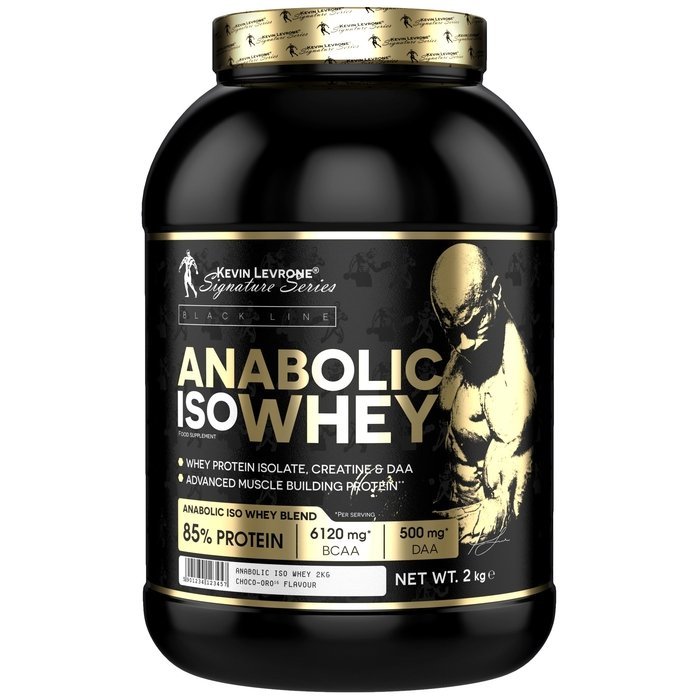


Kevin Levrone Anabolic Iso Whey 2kg
Kevin Levrone Anabolic Iso Whey 2kg is a whey-based protein powder supplied in a large resealable tub. The manufacturer’s product catalogue lists 25.5g protein per 30g serving, alongside creatine monohydrate, taurine and D-aspartic acid (DAA). The powder can be mixed with water or milk and used as part of your usual diet.
The 2kg size is listed as providing approximately 66 servings when prepared using a 30g serving. Actual serving counts depend on how much powder you use. Flavours and availability may vary between UK retailers.
Product formulations and labels can change. Check your tub for the current ingredients, nutrition panel, allergen information and preparation instructions.
At a glance
- Brand: Kevin Levrone Signature Series
- Product: Anabolic Iso Whey
- Pack size: 2kg
- Serving size listed in the product catalogue: 30g
- Approximate servings per 2kg tub: 66
- Protein per 30g serving: 25.5g
- Other listed ingredients per serving: 3g creatine monohydrate, 1g taurine and 500mg D-aspartic acid
- Preparation: Mix with water or milk, following the tub’s instructions
- Allergen: Contains milk-derived protein; check the label for full allergen details
What is Anabolic Iso Whey?
Anabolic Iso Whey is a powdered protein product in Kevin Levrone Signature Series’ Black Line range. It is sold in a 2kg tub and, according to the manufacturer’s product catalogue, provides 25.5g of protein in a 30g serving. The same catalogue lists creatine monohydrate, taurine and D-aspartic acid in the formula. Kevin Levrone product catalogue
A protein powder can be a convenient way to add protein to a drink or recipe. It is not essential for everyone, and it does not replace a varied diet. Whether it suits you depends on your food intake, preferences, training routine and any dietary requirements.
The word “Anabolic” is part of the product name. It should not be read as a promise of a specific body composition or training result. Changes in muscle mass depend on a range of factors, including training, food, rest and individual circumstances.
Nutrition information
The figures below are taken from the manufacturer’s catalogue and are stated per 100g and per 30g serving. Check your tub’s label to confirm that the values match the flavour and formulation you purchase.
| Nutritional information | Per 100g | Per 30g serving |
|---|---|---|
| Energy | 1,600kJ / 377kcal | 478kJ / 113kcal |
| Fat | 2.8g | 0.8g |
| Of which saturates | 1.6g | 0.5g |
| Carbohydrate | 3g | 0.9g |
| Of which sugars | 2.9g | 0.9g |
| Protein | 85g | 25.5g |
| Salt | 0.45g | 0.14g |
| Creatine monohydrate | 10,000mg | 3,000mg |
| Of which creatine | 8,400mg | 2,520mg |
| Taurine | 3,333mg | 1,000mg |
| D-aspartic acid | 1,667mg | 500mg |
The manufacturer’s catalogue lists approximately 66 servings in a 2kg tub, based on a 30g serving. Because 2,000g divided by 30g is about 66.7, the number of servings you get depends on the amount used each time and whether the tub contains exactly the stated net weight.
Nutrition values can differ by flavour or product version. If you track calories, protein, carbohydrate, fat or salt, use the values on the packaging you have.
Protein in your daily routine
Protein is found in foods such as dairy products, eggs, fish, meat, beans, lentils, nuts and seeds. A protein powder offers another option for people who want a quick drink or prefer a powder they can add to food.
The product catalogue lists 25.5g of protein per 30g serving. Protein contributes to the growth and maintenance of muscle mass. This is an authorised nutrition and health claim that applies when the product meets the relevant conditions for use.
Your overall protein intake comes from everything you eat and drink during the day, not from one shake alone. Consider your usual meals before adding a supplement. If you have a specific dietary requirement or medical concern, speak with a registered dietitian or other qualified healthcare professional.
Creatine and other listed ingredients
In addition to protein, the manufacturer’s catalogue lists creatine monohydrate, taurine and D-aspartic acid. The declared amounts per 30g serving are shown in the nutrition table above.
The catalogue lists 3g of creatine monohydrate, providing 2.52g of creatine, per serving. These are different quantities: the amount of creatine compound is not the same as the amount of creatine it provides. If you already use a creatine product or another supplement containing creatine, check the labels so you understand your total intake.
The label’s inclusion of an ingredient does not guarantee a particular result. If you are comparing protein products, look at the nutrition panel, ingredient list, serving size, cost per serving, flavour options and allergen information together.
How to prepare Anabolic Iso Whey
Use the serving size and preparation directions printed on your tub. The manufacturer’s catalogue lists a serving of approximately 30g, described as around one scoop. Scoop sizes and powder density can vary, so a kitchen scale can help you measure a consistent serving if you need to track your intake.
A simple preparation method is:
- Add water or milk to a shaker or glass.
- Add the amount of powder directed on the packaging.
- Shake or stir until mixed.
- Drink soon after preparation, following any storage guidance on the label.
The amount of liquid is a matter of preference unless the tub specifies otherwise. More liquid makes a thinner drink; less liquid makes it thicker. Mixing with milk changes the nutrition of the finished drink, including its calories, protein, carbohydrate and fat. Include those additions in your daily totals if you track them.
You can also add protein powder to foods such as porridge, yoghurt or pancake mixtures, if the product directions allow and the flavour works for you. Mixing it into hot foods may affect texture, so add it gradually and stir well.
When to use a protein shake
There is no single required time to drink a protein shake. You might choose to have it with breakfast, between meals, after training, or at another time that fits your routine. The practical question is whether the serving suits your overall food intake.
A shake can be convenient when you are away from home or short on time. It can also be mixed into a smoothie with fruit or other ingredients. Those additions change the final nutrition, so consider them if you are monitoring your intake.
You do not need to take a shake simply because you have finished a workout. If you already get enough protein from meals and snacks, a supplement may not be necessary. If you are unsure about your protein needs, particularly if you have a medical condition, seek individual advice.
Flavour options
Product listings show a wide range of flavours for Anabolic Iso Whey, including options such as Chocolate, Vanilla, Cookies with Cream, Coffee Frappe, Strawberry, Banana-Peach and caramel-style varieties. Flavour names and availability can differ between markets and retailers, and not every flavour will be stocked in the UK.
Always check the flavour-specific label. Nutrition information or ingredients may vary by flavour, and allergen advice should be checked on the exact product you intend to buy.
Who might choose a 2kg tub?
The 2kg size may suit people who use protein powder regularly and prefer buying a larger tub rather than smaller packs. The catalogue’s approximate serving count can help you estimate how long it may last, but your actual use will depend on serving size and frequency.
A larger tub can also be useful if you have already tried the flavour and know it suits you. If you are choosing a flavour for the first time, consider whether a smaller size or sample is available. Store the product as directed and use a dry scoop to help keep moisture out of the tub.
Anabolic Iso Whey is not limited to a particular training level or gender. However, suitability depends on the individual and their dietary needs. Check the product information if you have allergies, avoid certain ingredients, or follow a vegetarian diet.
Anabolic Iso Whey compared with other protein options
Different protein products have different ingredient lists, nutrition values and uses. Compare the label rather than relying only on product names such as “isolate,” “lean” or “advanced.”
| Option | What to compare |
|---|---|
| Anabolic Iso Whey | 2kg size, protein per serving, added ingredients, flavour and milk allergen information |
| Other whey powders | Protein source, serving size, protein per serving, calories, ingredients and price |
| Plant-based powders | Protein sources, allergen information, flavour, texture and protein per serving |
| Protein-rich foods | Protein and other nutrients, portion size, preparation time and how they fit into meals |
The name “Iso Whey” does not remove the need to inspect the ingredient list and nutrition panel. Check the packaging to confirm the protein sources and any additional ingredients in the exact product version you buy.
Frequently asked questions
How much protein is in one serving?
The manufacturer’s catalogue lists 25.5g of protein per 30g serving. Verify the nutrition panel on your tub, as figures can differ by flavour or formulation.
How many servings are in the 2kg tub?
At 30g per serving, a 2kg tub provides approximately 66 servings. Your serving count will vary if you use more or less than 30g.
How many calories are in one serving?
The catalogue lists approximately 113kcal per 30g serving. Mixing it with milk or adding ingredients will increase the calories in the prepared drink.
Does Anabolic Iso Whey contain creatine?
The catalogue lists 3,000mg of creatine monohydrate per 30g serving, of which 2,520mg is creatine. Check your tub’s label for confirmation and consider other products you use.
Does it contain taurine and D-aspartic acid?
The catalogue lists 1,000mg of taurine and 500mg of D-aspartic acid per 30g serving. Confirm these amounts against your product label.
Can I mix it with milk?
The powder can generally be mixed with milk or water, but follow the tub’s directions. Milk changes the final drink’s nutritional values and may affect suitability for people with milk allergy or lactose intolerance.
Is it suitable for people with lactose intolerance?
The product is whey-based and contains milk-derived protein. The amount of lactose can depend on the formula, so do not assume it is suitable if you are lactose intolerant. Check the current ingredient and allergen information and seek healthcare advice if necessary.
Is it suitable for vegetarians?
Whey is milk-derived and is generally compatible with lacto-vegetarian diets, but the full ingredients and processing details should be checked. The product may not suit vegans. Check your tub’s label if this is important to you.
Can beginners use it?
A protein powder can be used by adults at different training levels, but it is not required for beginners. Consider your usual food intake and follow the serving directions. Anyone with a health condition or dietary concern should seek professional advice.
Can I use it every day?
Follow the product directions and consider the rest of your diet. If you are using other supplements containing creatine or other listed ingredients, review the combined intake. Consult a healthcare professional if you are unsure whether daily use is appropriate for you.
How should I store the powder?
Follow the storage instructions on the tub. Keep the lid closed, store it in a dry place, and use a dry scoop. Check the best-before date and any instructions for use after opening.
Be the first to review “Shop ANABOLIC ISO WHEY 2kg”
Related products

ANABOLIC-STEROIDS
ANABOLIC-STEROIDS
ANABOLIC-STEROIDS

All Products
ANABOLIC-STEROIDS
ANABOLIC-STEROIDS
All Products
All Products
Reviews
There are no reviews yet.